
From anatomy to function
Studying traumatology can begin with a body region, an injury or a question about recovery. Identify the focus of your reading at the outset so that an anatomical atlas is not confused with a guide to action.
The WHO describes musculoskeletal conditions as encompassing problems affecting bones, joints, muscles and the spine. Its rehabilitation framework broadens the focus to how people function and participate in everyday activities.
Organise your literature into three levels
- Structure: anatomy, biomechanics and musculoskeletal terminology. Atlases provide context for later reading.
- Problem: works focused on a region, injury or condition. Check the population and setting considered by the author.
- Function: material about independence, activity and participation. Identify how goals and progress are described.
How to compare a textbook and a guideline
A textbook may provide an organised overview of a field; a guideline usually addresses more narrowly defined decisions. Check their purposes before comparing them. An atlas and a clinical recommendation have different methodological requirements.
In a publication about recovery, note which outcomes are measured and when. Ask whether the text distinguishes a laboratory measure from an activity that matters in daily life. Also check the date, study population and acknowledged limitations.
A reading route by body region
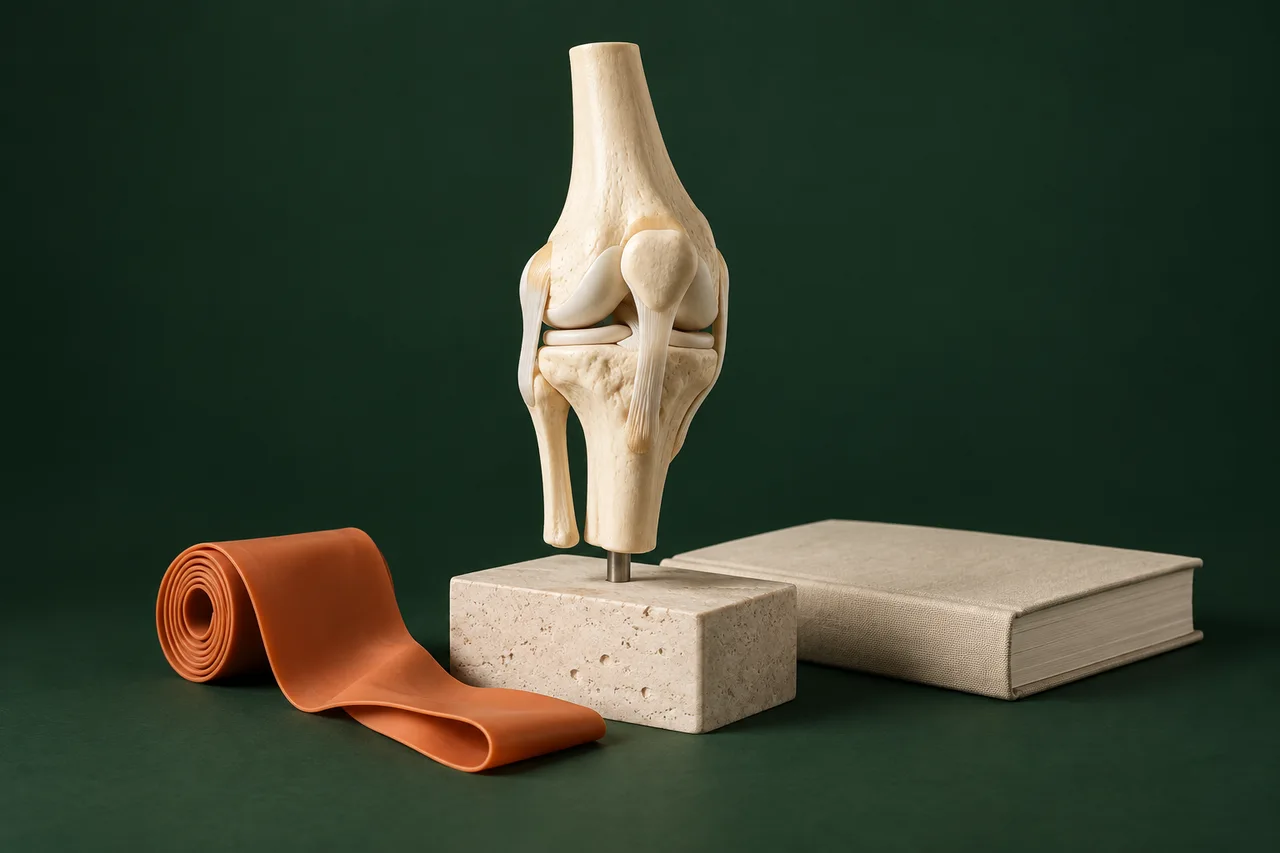
If you choose the knee as your topic, prepare a glossary of structures, then organise the literature by assessment, common problems and function. This is a study framework, not a treatment sequence. Add questions to discuss during supervised training.
Explore neurosciences for the neurological perspective. The publications guide can help you select a reading format.
Further reading
Check the original documents and their update dates. Sources accessed on 26 September 2026.
- WHO · Musculoskeletal conditions ↗Scope of musculoskeletal conditions. Published in 2021; source in Spanish.
- WHO · Rehabilitation ↗Functioning, independence and participation in rehabilitation. Source in Spanish.
Reading guidance for study. This is not a clinical guideline or a specialist review. How it was prepared.